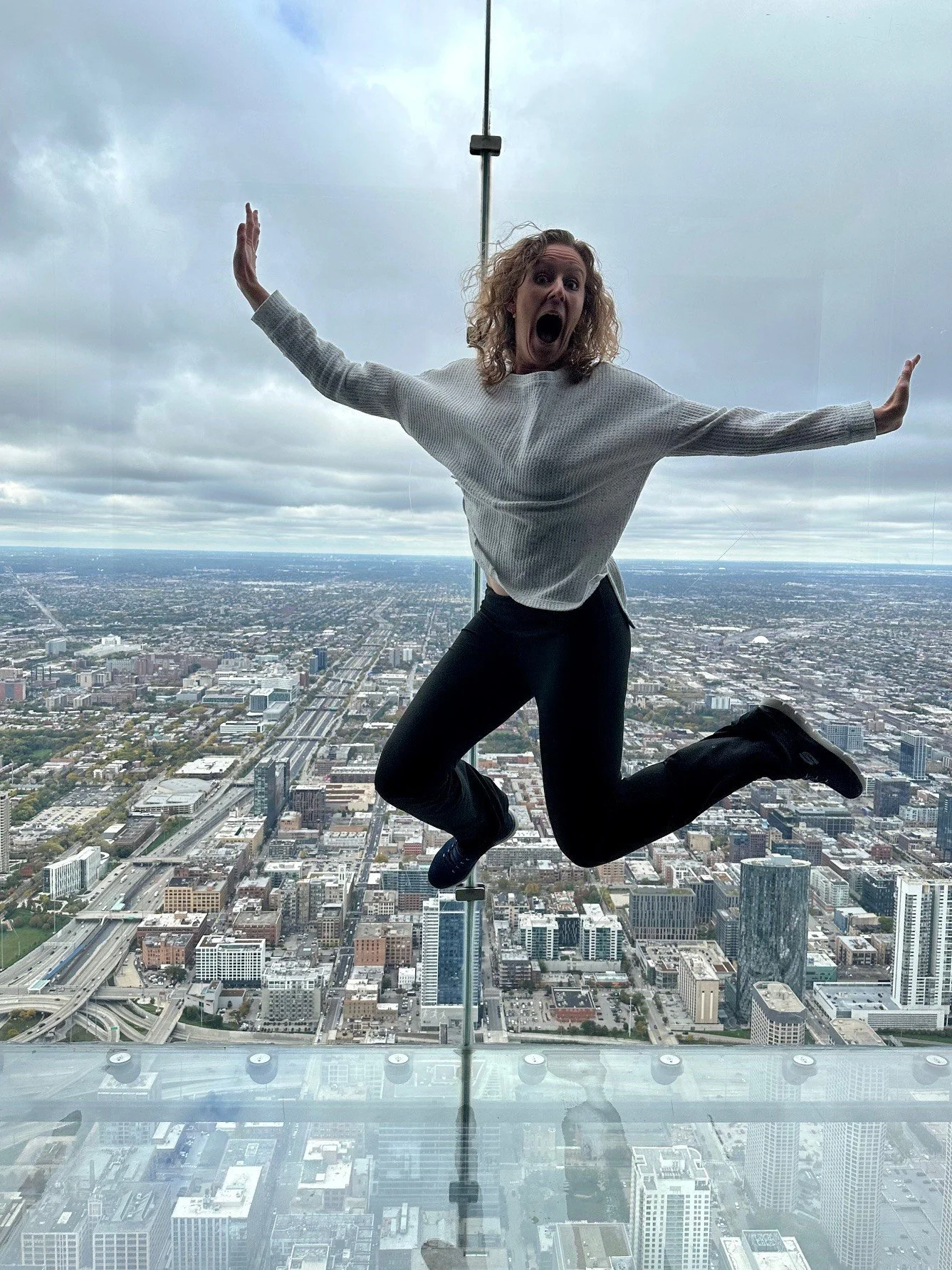
The abyss of freedom
When I worked in my corporate job years ago, I used to dream of freedom. Freedom to decide my own hours, to decide what projects I made, to decide (aka be the final approver) of when I take time off…it seemed like a vast utopia of delight and joy.
Actually, I was probably dreaming of freedom long before that. Freedom to stay up as late as I wanted, to eat sweets whenever I wanted, to watch whatever I wanted on TV. Funny the freedom you dream about as a kid – when later in life you end up being naturally more restrictive than the rules ever were as a kid (for the record, I can barely stay awake until 10pm, I limit my sweets more than my parents ever did, and I barely watch TV, usually opting for a book).
The thing about freedom, though, is that the ultimate version of it – with no bounds whatsoever – actually leaves you floating out in an abyss. You may feel untethered, but you may also feel ungrounded.
In this era of “life hacks” and productivity shortcuts and modern conveniences, we’ve decimated many of the things that used to constrain us. And mostly, that’s great.
But occasionally, it means we might be floating around loose, with nothing to bounce off of.
One of the things I’ve long loved about the life I’ve designed is the freedom that is central to it. Sometimes, though, every now and again, I think I may have over-optimized. That I may have sanded a few too many edges.
Oliver Burkeman captures this feeling in his book Four Thousand Weeks:
On the one hand, there’s the culturally celebrated goal of individual time sovereignty – the freedom to set your own schedule, to make your own choices, to be free from other people’s intrusions into your precious four thousand weeks. On the other hand, there’s the profound sense of meaning that comes from being willing to fall in with the rhythm of the rest of the word: to be free to engage in all the worthwhile collaborative endeavors that require at least some sacrifice of your sole control over what you do and when.
We don’t tend to think of this when we talk about freedom. When there’s no structure, no expectations, no pull on you or your time, you’re left with something more complicated than constraints…
Now it’s about choice.
So the question – the one I am playing with now – is: What do I want to choose, over and over, even with all its inherent constraints and edges and friction?